At the Centers for Medicare & Medicaid Services (CMS) Innovation Center, disconnected payment and care delivery portals created friction and took precious time away from patient care. Innovation Center participants, including small providers with few employees, had to navigate multiple portals, enter the same information in various places, and repeat onboarding processes, often struggling to find support when they needed it.
The Innovation Center recognized that there was no quick fix; solving this problem would require reimagining the entire user journey. So, the Innovation Center convened all the contractors that deliver IT solutions for models and presented the problem. Tria Federal took a lead role in deploying human-centered design (HCD), applying technical strategy, and facilitating collaboration.
The first step was gathering feedback from stakeholders. Working alongside Innovation Center staff and contractor partners, Tria supported a broad research effort that included surveys, card-sorting exercises, interviews with participants and contractors, input from state health organizations, and insights from prior HCD sessions.
Using a visual collaboration platform, the team synthesized these findings into a clear picture of the user experience. It wasn’t a pretty picture: participants described feeling overwhelmed by the number of logins they needed to remember, being unable to locate the right instructions when needed, and feeling burdened by time-consuming onboarding processes. They also noted that each system looked and behaved differently from the next, creating confusion every time they shifted tasks.
Their frustrations revealed symptoms of a deeply fragmented digital ecosystem—one built over many years by multiple teams, each solving a different piece of the puzzle.
Designing Solutions That Work Together
With the understanding of the fragmented digital ecosystem, Tria supported the Innovation Center in creating meaningful, systemic change.
This started with a “badge-less environment,” where people were not siloed by job titles, team boundaries, and contracting lines. Designers, engineers, product leads, and Innovation Center employees worked side-by-side as a single unit, focused on shared outcomes. Over five weeks, the group held 10 sessions centered on application access, a unified digital experience, and participant support. This structure enabled real-time feasibility assessments, rapid alignment around user pain points, and accelerated idea refinement.
Tria helped develop practical solutions across three major areas. The first focused on streamlining application access. By mapping onboarding journeys and clarifying access requirements, the team reduced confusion at the start of participants’ interactions with the Innovation Center.

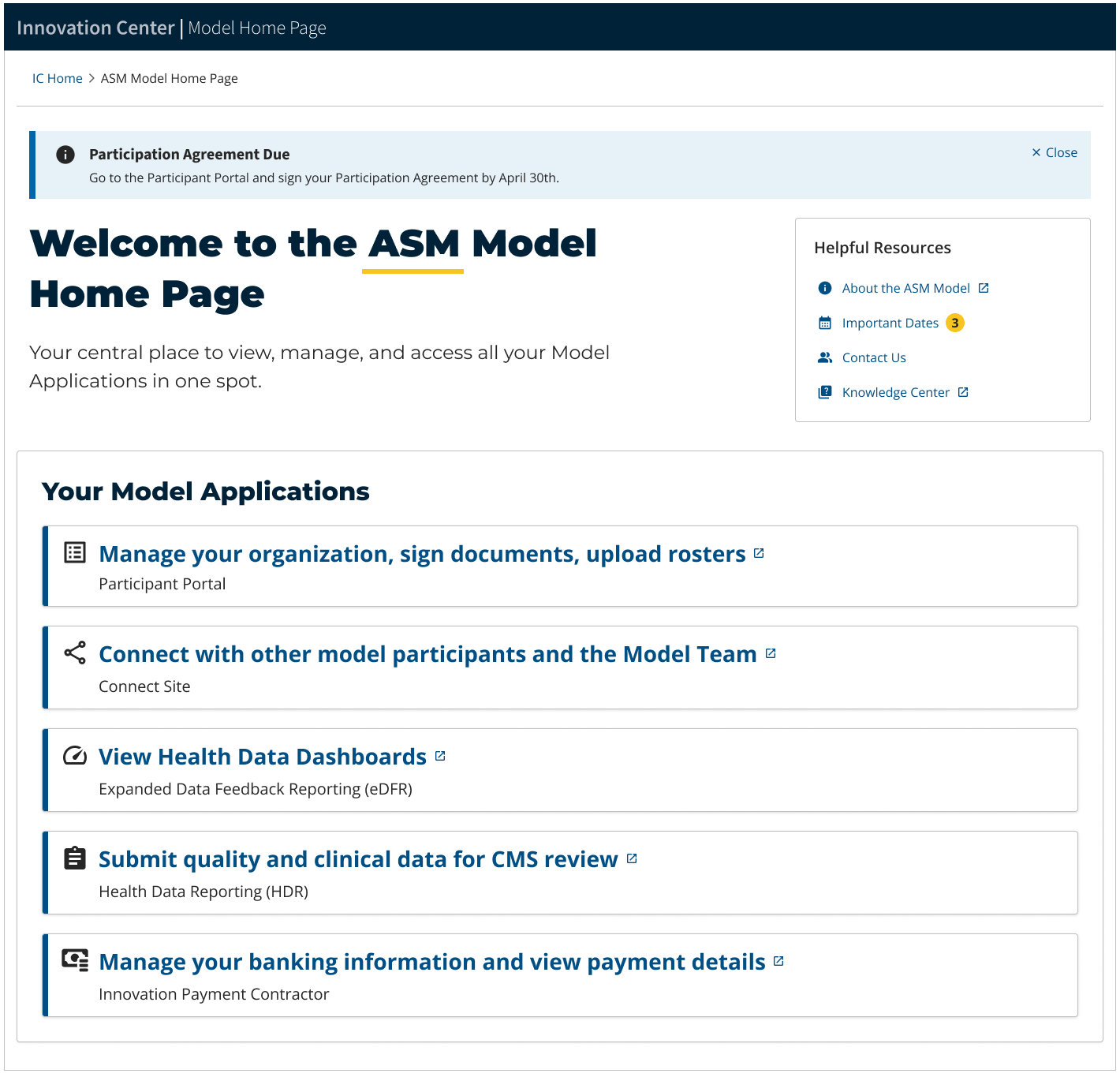
The second area concentrated on unifying the digital experience and eliminating the need to navigate scattered portals. Tria supported redesigns to the CMS Innovation Center landing page, where users access the applications for the model they participate in, and individual model home pages to create a predictable, intuitive entry point for all participants.
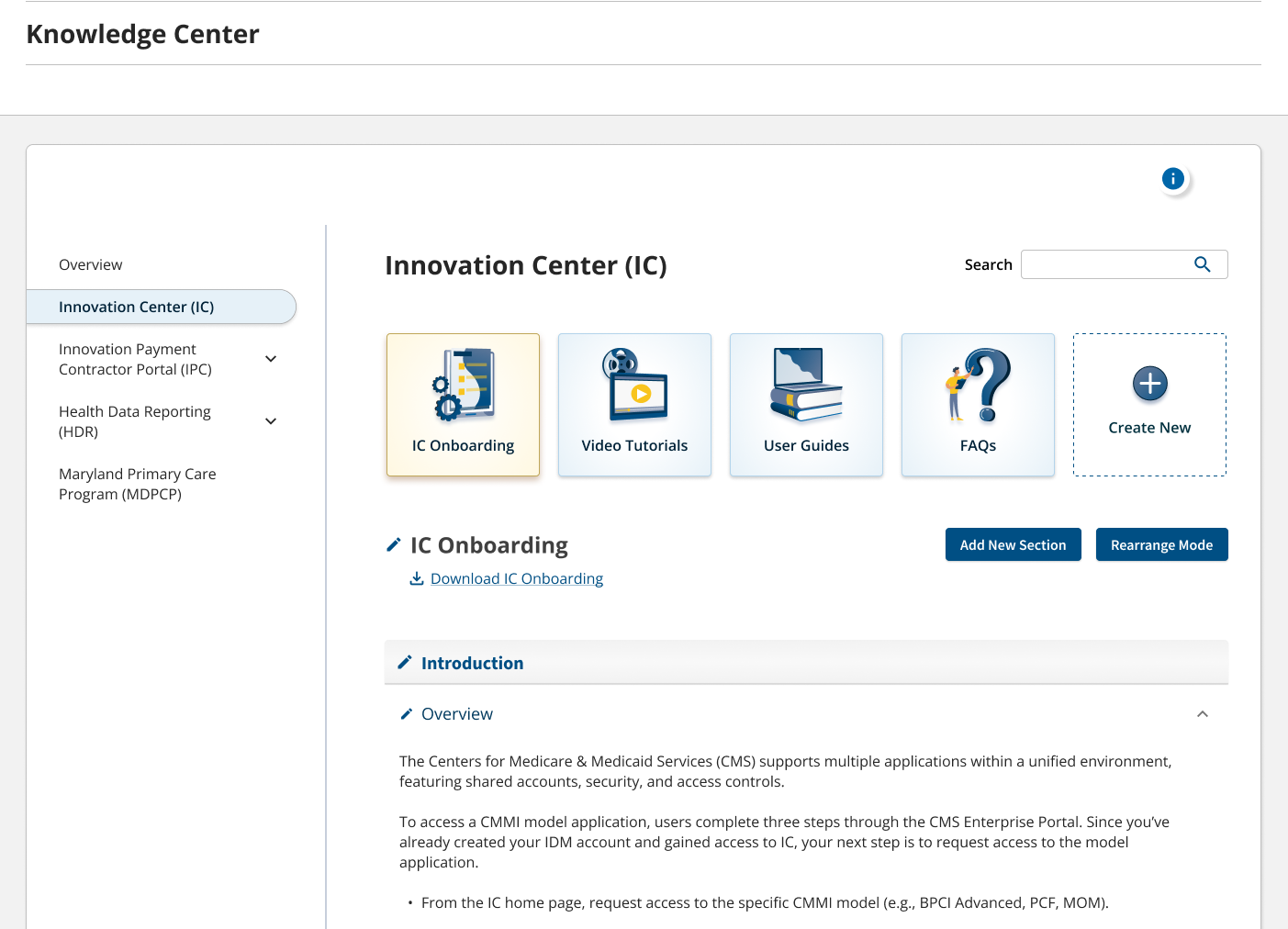
The third solution centered on developing a centralized Knowledge Center, providing users with a single, easy-to-navigate destination for training, troubleshooting, and documentation.
The team then refined these solutions through usability testing and high-fidelity mockups, workflows, and detailed requirements that balanced user needs with technical constraints.
By the end of the initiative, the Innovation Center had a full suite of deliverables, including participant personas and journey maps, system-wide task mappings, problem statements and user requirements, high-fidelity prototypes, and a roadmap to guide and evolve alongside development initiatives. These deliverables provide long-term value by ensuring that improvements can scale, adapt, and continue to reduce burden over time.
Delivering Value from Day One
Even before full implementation, early benefits became clear. Participants reported that they were pleased with simpler onboarding processes, clearer instructions, fewer redundant steps, and more intuitive navigation through refreshed landing pages and model entry points. The emerging Knowledge Center enabled a self-service experience. Most importantly, participants began to see a more consistent, predictable experience across Innovation Center models.
This initiative illustrates how structured collaboration, HCD, and systems thinking can modernize complex federal digital services. It also reflects Tria’s culture: collaborative, mission-driven, and grounded in real user needs.
Tria is proud to help the Innovation Center take this critical step forward in giving healthcare providers a more efficient, user-friendly digital experience that frees them to focus on patient care.